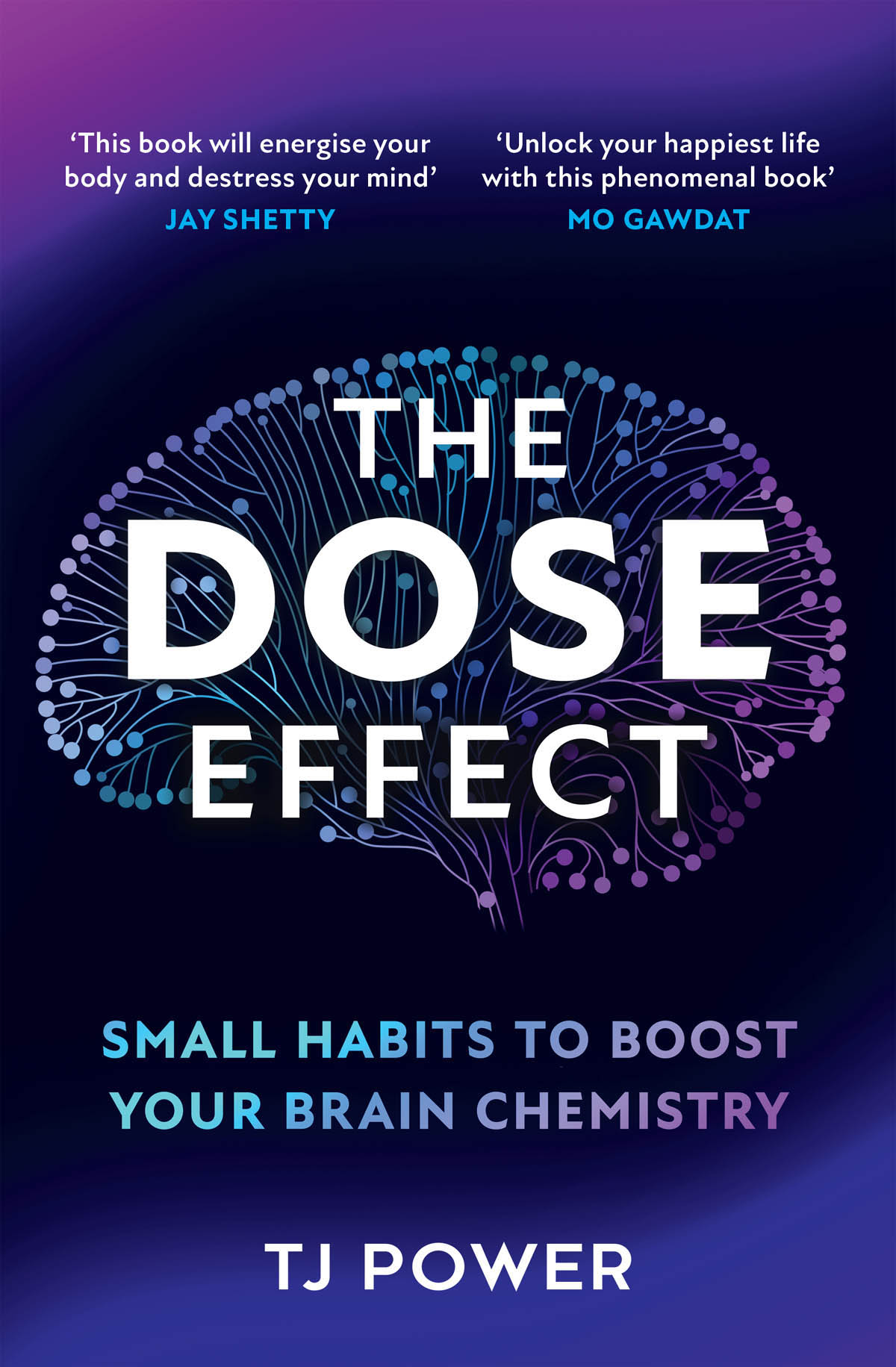
The DOSE Effect
The DOSE Effect by neuroscientist TJ Power presents a neuroscience-based framework for mental health derived from research studies. The book identifies how modern lifestyles—sedentary behavior, digital overload, processed foods, and indoor living—disrupt four ancestral neurochemicals: Dopamine, Oxytocin, Serotonin, and Endorphins (the "DOSE" formula). Power proposes 20 evidence-based "DOSE Actions" (five per category) to restore natural brain chemistry and achieve sustainable wellbeing through effortful engagement rather than passive consumption. Complements Dopamine Nation's warnings about overstimulation and Andrew Huberman's protocols for optimizing neurochemistry.
Dopamine: Motivation and Focus Dopamine drives goal pursuit, but modern "quick dopamine" sources (social media, sugar, substances) exploit the Pleasure-Pain Balance (see Dopamine Nation), causing crashes below baseline. Recovery requires embracing productive discomfort: (1) Environmental Discipline—strengthening the anterior mid-cingulate cortex through bed-making and workspace organization (relates to Discipline as environment design); (2) Flow States—deep focus achieved via single-tasking, accountability, and gamified timing (see Deep Work, The One Thing); (3) Digital Boundaries—delaying morning phone use, limiting scrolling to three daily sessions, and maintaining evening phone fasts (aligns with Essentialism); (4) Cold Exposure—gradual immersion (30–60 seconds) leveraging the pain-pleasure balance to increase baseline dopamine by up to 250% (see Andrew Huberman, David Sinclair); and (5) Purposeful Pursuit—identifying life challenges during phone-free morning walks.
Oxytocin: Connection and Belonging Oxytocin facilitates bonding and requires quality in-person interaction and positive self-talk. Digital isolation creates an epidemic of loneliness with health impacts equivalent to smoking 15 cigarettes daily. The five actions include: Contribution (acts of service countering comparison); Physical Touch (five 3–5 second hugs daily plus massage/pet interaction); Quality Social Connection—deep relationships (per the 85-year Harvard Study) built through alcohol-free activities, active listening, and eye contact, while managing social anxiety by shifting focus from self-consciousness to contribution (see Self Intelligence on social feedback loops); Gratitude Practice (twice-daily inquiry upon waking and sleeping—see Think Like a Monk, Stillnes is the Key, and Habit Stacking for gratitude anchoring); and Self-Celebration (acknowledging daily wins to reinforce habits via neuroplasticity—see Habit Systems on identity votes).
Serotonin: Body-Mind Integration Ninety percent of serotonin is produced in the gut, impacting mood via the vagus nerve. Modern deficits in whole foods, sunlight, and sleep disrupt this system. Recovery actions include: Nature Immersion (headphone-free forest bathing using sensory checklists—see The Comfort Crisis on the need for natural challenge); Sunlight Protocol (60+ minutes daily: morning exposure for serotonin/cortisol, sunset for melatonin); Gut Health (80% fullness, 1g protein per pound body weight, complex carbs, delayed coffee intake, fermented foods); Resonance Breathing (6 breaths/minute and physiological sighs to activate the parasympathetic nervous system); and Sleep Optimization (cool bedrooms, 30-minute pre-bed phone removal, no caffeine after noon).
Endorphins: Stress Relief and Vitality These natural painkillers require physical exertion to activate. Actions include: Hard Exercise (two strength and two endurance sessions weekly—see VO2 MAX on training diversity for longevity); Heat Therapy (15-minute sauna/baths 4× weekly—see Andrew Huberman's deliberate heat exposure protocols); Music and Singing (5+ minutes daily to exert the diaphragm, categorized by function: energizing, calming, focused, or grief-processing); Laughter (three weekly laughter-conducive environments); and Mobility (30–60 second stretching routines three times daily plus spinal decompression).
Implementation Power emphasizes selection over perfection (see Essentialism, The One Thing): choose one action per category initially. DOSE Stacking combines multiple actions (see Habit Stacking)—e.g., social hikes merging nature, exercise, and connection; focused work sessions combining flow states and sunlight. This framework offers a lifelong practice to reverse burnout through restored neurochemical balance, aligning with the principle from Discipline that sustainable change comes from system design, not willpower.